Dec 19, 2012

Breaking The Law!!!


Or at least, showing some spunk.

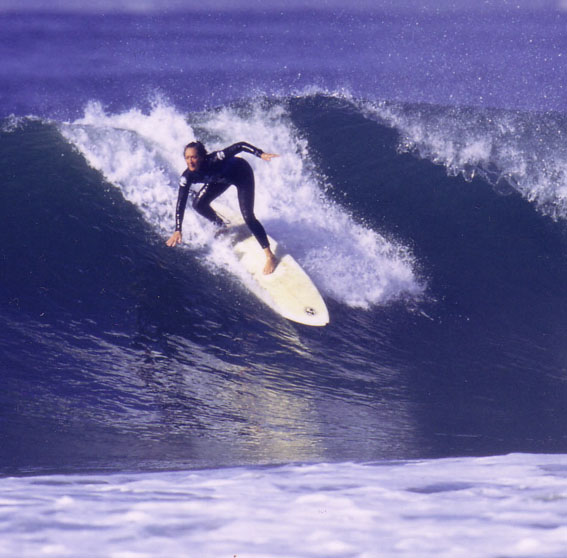
Mister Dirk on his new Omni, boldy riding waves as local law enforcement scans the horizon for crimes and misdemeanors.


Best music video ever? Weigh in!

From Surfline...


The generally shallow and painfully corporate Surfline published a well-developed article on various aspects of surf photography. One of the better things they've posted.

Link here...

Back in the late 60's, Surfer Magazine did an article on double angle surf photography. With so many photogs following the pro tour, multiple angles of the same moment are now commonplace. Nice they connected the dots in this article.

Dec 17, 2012

Omni Love!!!


Paul,

I just got out of the water, dripping on the keyboard just got out of the water, because I had to send you a note to tell you the Omni is amazing!

If mind-blowing wasn't such an archaic word now a days I would describe it that way.

Only two feet maybe three on the sets but with enough offshore to make it look really good maybe better than it really was, but I digress... I like to do this sideways stall at the top, right after take off, you never know when the swell could hit a sandbar and cover you up but if that doesn't happen this drifting sideways at the top of the wave is nice because you can pick the steepest moment to drive to the bottom, get maximum speed and throw a turn. Not a hard move really it mostly depends on getting the timing right but it requires a mat that is ultra sensitive to the wave and to your body movements to do it well.

The Omni has it, it's fucking mind-blowing, there I've said it.

The best part is the mat keeps getting better every time I ride it.

I can hardly wait for the next go out.

So thanks for the great mat!

Unreal!

Bruce

---------------------------------------------------------------

Hello Paul-

I got the new Omni out in some waist to chest high, semi-mushy surf today and I am very pleased with the performance. The mat caught waves easily, seeming to want to pull itself into the drop. It turned sharply with just a roll of my hip and once on the face it tracked and held it's line with little input from me.

Overall it felt fast and responsive and just right. 90 degree inflation feels like it's sweet spot. When I ran it at a lower inflation it felt sluggish and didn't like to hold it's shape. So the omni is definitely a winner. Thanks for building a great mat.

BTW After I was out for a while and had caught 6-8 fun waves, I overheard two shortboarders near me complain about how the waves sucked and they were going to look elsewhere for better waves. Unfortunately they were no better anywhere else. They just needed better surfcraft!

Aloha,
John
----------------------------------------------------------------
 
had a few waves on an Omni and the Standard today. Both really good. I especially like the Omni. Cranks turns like a Standard but just keeps on motoring whatever's happening. It a serious, stand out surfcraft. :-)
 
G

----------------------------------------------------------------

I have surfed the Omni a few times now and like it even better than the Tracker. Catches waves more easily and seems happier.

Spence

---------------------------------------------------------------

Hey Paul

I rode the OMNI all three sessions; Boneyard (4'-6'+ with power), Swamis in the dark dawn patrol (3'-4' glassy )and Seaside 2'-4' somewhat sloppy). The mat took no getting-use-to and worked well in the varying conditions, excellent! 
 
As mentioned earlier, the mat is fast and agile. Making sections seemed effortless. I was able to ride through white water and catch up to the shoulder on a few waves. 4-5 hours of riding so far........please make a second. I ride over barnacles every now and then......

Thanks,

Pete
 
----------------------------------------------------------------
 

Hi Paul,
I continue to be amazed at the fine-tuning that goes into the designs, and the ensuing progress. And if I hadn't felt the improvements over time I would have a harder time believing it! But now when I handle each new model, even before I ride it, it's almost like I can feel the extra intelligence that's been applied. That's a modernist aesthetic that I really like -- clean simple exterior encoded with intelligence.

Dirk

---------------------------------------------------------------

Hiya.

Back from Mexico. Usually I would take two mats to be prepared. But this time I took only the newly delivered Omni. Unfortunately no pictures. Llike other Omni riders, I discovered the name is completely apropos. Waves were 2-3, but nicely shaped. The sensitivity of the Omni became apparent right away, with a little body shift at the top of the wave. Nice slide and cutbacks, too. It's a winner. It's Omnilicious.

Peter
 
---------------------------------------------------------------

Dec 15, 2012

From Larry...


hello

first off, noticed you have checked out our little place on the internet......electric sunshine blog.

thanks for the link on the vinny bryan \ bunker story.

posted these pictures a while while ago, maybe you saw em', or have used them...maybe not. thought you might appreciate them.

got them from SURFER Magazine....forget exactly what year....mid or late 60's
 
 
LS

Dec 14, 2012

Dolphins and Mollydookers...


Hi Mate,

First day of Christmas break saw some nice 2 meter swell, clean conditions. Managed to get a few mollydookers along with the dolphins. I love summer !!!

Cheers
Bretto

Dec 9, 2012

Sunday Mash-Up!!!

 Ace Of Cups, 1968
  
 
 Denise Kaufmann, same time
 
  
Denise Kaufmann -- 2005 


Vinny Bryant, Off The Wall -- early 70's
  

Dana Nicely -- same board, early 70's


                                                                      Animation From The Natural Art
 
  
Ok, so what do these images have in common?

Bob Green over at My Paipo and I have exchanged a few emails recently regarding Vinny Bryant and his radical boards/surfing.

Summarily, Bob put me onto an article dealing with Denise Kaufmann, The Ace of Cups, her relationship with Vinny, and the band's appearance in Fred Windisch's wonderful, late 60's surf film, The Natural Art. The article is long read...but full of interesting stuff.

Lots of Ace of Cups stuff here ... https://web.archive.org/web/20120214175240/http://www.lysergia.com/LamaWorkshop/AceOfCups/lamaAceOfCups.htm
  
Tangentially, I did a quick search on the etymology of the word "shindig," and found this story...

Dec 8, 2012

Dec 7, 2012

From Bretto...


Well, sort of. Vid made by Chad!

From Kendog..


The usual suspects down in SD last week!

Lance Smith caught the action. Slide files here...


Dec 6, 2012

From Ian...


Have a happy 2013!

Cheerio,

Ian

Nov 18, 2012

From Guerdon...

(Not Guerdon...but destined to ride a Fatty?)


"For surf mat sizing, how about using terms usually reserved for business suit sizing? 

I would be a portly cadet. You could be a evertrim long, with the tearaway exit."

Guerdon


Nov 16, 2012

From Bob...


It is the best I could do with my smart phone and no crew. Know anyone who can take video from the water?

The OMNI performed well.   The waves were glassy and up to three feet, so I was able to take some nice drops and trim on some faces. 
 
Thanks again for sending it sooner than promised.

Bob

Nov 15, 2012

From Rich...


Hi Paul,

We are finally beginning to get back to normal here in Beach Haven. It still looks like a war zone w bay dust and mold in the air everywhere and heavy equipment moving sand, boats and trash constantly. This is a pic from the morning high tide on Bay ave, the main drag through town. Twelve hours later was when the storm did its worst damage w at least two more feet of water. I'm afraid I can't credit the pic as so many people sent me storm pics that I can't remember who took them all.

We are still banned from the beaches here. A few days after the storm was one of the best swells of the year and it went unridden on all of our beaches. I did hear of one young guy that went out and got arrested by M16 toting military types.
 
Thanks for the mat deck article. I can really appreciate the years R and D that you've gone thru to get to where you are today. So great that you credit Dale too.

thanks for sharing,
 
Rich

Nov 14, 2012

From Lloyd...


Hi Paul
 
Just got back from NZ. No waves with the mat yet but thought you might like this shot I dug out when I was in NZ of me paddling up a wave in Hawaii on a hodgeman mat.

Also found this image from 1973 and thought you would like a look...


Greg talking to Viny at Polhale State Park Beach, Kauai, Hawaii, about the jet chambers - the idea of the holes in his board was that they suck air from the deck under the tail and give extra drive - Notice the asymmetric nature of the board chimes and the single jet chamber near the front - so the board was specifically designed to straight and fast on rights. Only ever seen one of these boards and it went like the clappers.
 
Also found pther image of me on the hodgeman...


 Cheers, Lloyd

Nov 13, 2012

A Not-So-Brief, Highly Subjective Look At Mat Decks and Non-Skids...

In The Beginning...


Along with their close cousin, rental rafts with rubber end caps, the high end mats of the 50's, 60's and 70's were made of cotton canvas with a thin rubber inner-lining to insure air tightness. Little thought was given to the grip on the deck. Since mats were primarily ridden by bare chested kids, traction had to be limited to non-chafing material anyway. So this material was good, if not perfect.

True, the dreaded affliction for all day riders known as "titty rash" was a common occurrence at the time. But, that had as much to do with sand trapped between the deck and our chests as anything else. We were going straight off and often hanging onto flange ropes, so that was part of the reason why the canvas deck was fine, grip-wise. Bottom line....neither I or anyone I knew ever bitched about the decks being too slippery back then.

As mat surfing matured into a more potent form of wave riding in the late 60's, the flange ropes disappeared, leaving only the traction of the deck to hold us onboard. We were also wearing wetsuits much of the year. Even with those two drawbacks, traction-wise, there wasn't much to complain about. In retrospect, I think a lot of that was due to the fact that the cotton canvas kept it's soft "hand" (the feeling material gives you when you touch it) even when it was wet.

In the late 70's, the downside of having the same texture top and bottom led wholesalers (Merrins and Rip Curl among them) to mass produce mats in Asia with smooth nylon bottoms. At that time, no thought was given to adding grip to the deck, just decreasing drag on the bottom.


(Merrin Surf Mat, 1979, Sans Handles and Fins)


The nylon bottoms were still pretty stiff, but the material was smooth to the touch, and offered noticeably less drag running through the water. Definitely a step forward. But the flimsy canvas decks weren't as grippy as the old Hodgman Converse mats, and we began wondering how to deal with that problem even back then. Surf wax on the deck, maybe?

We started peeling the nylon off the bottoms of these mats to get to the thin rubber skin underneath, and those mats went even faster...confirming the theory that pliability of the bottom took precedence over smoothness when it came to speed.

So, the next logical step was to begin making thin nylon mats in the early 80s' -- in the hope that total pliability would lead to the ultimate in trim speed. True enough, the mats flew down the line...but the nylon fabric we used left the decks slick as ice. I had a case of Slipcheck in my garage (left over from my days as a go-fer at W.A.V.E. Corp.) so we sprayed the decks of the original nylon mats with that stuff. They were serviceable in terms of grip, but hardly ideal.

The following attempt at an ideal deck was to bond strips of yachting canvas to the decks. This was pretty effective....relative to everything after the Hodgman era.


Unfortunately, the yacht canvas got too smooth after maybe 15 go-outs, so the next step was to try rubber grit to the decks. We pilfered ground rubber from the trash bin at Dal Pozzo's tire retread facility in Santa Barbara. Then we layed down strips of wetsuit glue along the deck, and sprinkled the rubber over the wet glue. Then, after it set up, added another coat of glue to seal it all up. It was crude, but effective.


Actually, it was a little too effective. The grip was so tight that you had to slide onto the right spot upon takeoff, because you could barely shift your positioning during the ride. Once you settled in, that was pretty much it. On narrow mats and in bigger waves, it was great. But in smaller surf or on wider mats, where we wanted to slide around to maximize our body english, it was restricting.

Around 2007, I made a mat for Gloria that was made of thin nylon, but with an additional layer of cotton canvas bonded to both sides.


I loved being on that mat, because the canvas was so comfortable. But of course, the performance was lacking because the canvas was on both sides, and the lamination added even more stiffness.

Shortly thereafter, I started gluing wide strips of cotton canvas on 4GF mats. I was hoping to replicate the feel of the old mats, while maintaining modern performance.


The grip of these mats worked fairly well, but it was hard to get the canvas to stay bonded to the nylon decks, even with high end adhesives.

Around this time Bagjuan, up in WA state, started bonding EVA foam to the decks of his 4GF mats.


We tested that deck treatment in the water, and really liked it. With BJ's blessing and assistance, we began bonding patches of the stuff onto our prototype mats.


The smaller patches seemed to work best, and became the stock deck on 4GFs for the next few years.


In 2009, we obtained a sample of some moderately heavy nylon canvas material that was bondable with our usual thin fabric. This new material was a lot like the texture of the Hodgmans, and I smelled a breakthrough of sorts...what if we could finally build mats that felt like the old Hodgmans, but went like the current generation of mats???

I immediately started making prototypes with this new canvas stuff on the deck.


The first ones worked pretty good, but I had to juggle the I-Beam heights and the corner shapes to maximize the heavier deck material. (In essence, we could get away with more fuzzyness, design-wise, with the thin-decked mats.) So, the mat designs became more refined as a side benefit. And the grip, while still not ideal, was very comfortable and easy to use. They were a ton of fun just to be on!

I made the decision to shift over to the black nylon canvas decks on all our mats. The loss of performance, speed-wise, was minimal. And the fun factor went up 3 fold.

The heavy black deck material was expensive on a per-yard basis, but it alleviated the need to bond anything on the deck, so the time saved far outweighed the cost of the material. Plus, I didn't need a work space that could handle the massive fumes caused by the cement we used to bond the patches.

We also stopped using logo patches on the decks at that time too, because, a) it was hard to bond anything permanently to the coarse canvas texture, and b) since we weren't bonding patches to the deck, why slop around in the glue at all? Cheaper and greener. And less commercial looking too, which seems to rub most mat riders the right way.

The result of all this led to a significant drop in price. ($285 down to $199 per mat, USD)

The canvas decks made wider mats more viable, because the decks were more stable and easier to move around on during a ride. The XL and UDT models came into being straight away, and the longer roundtail models (Tracker and Vespa) followed the next summer. All because we had a more stable, easier to ride mat to work with.

One downside of the heavier canvas decks was a little less glide in weak/rolling waves, and sometimes on small, zippery walls. Personally, I thought the upside of being able to move around on the deck with ease while riding outweighed this. But some riders missed the super glide of a thin decked surf mat.

So, I tried a couple of variations of the canvas-topped mats to minimize that downside.

The most sophisticated idea was a hybrid deck mat, with canvas in the middle, and thin nylon twill on the rails. (Thin fabric on the bottom, of course.) I had high hopes for this idea, even though it was a pain in the ass to render. Turned out, it didn't glide one iota better than the all canvas decked mats...


The next idea I tried, which did turn out to be of benefit, was to order the canvas deck fabric with a softer urethane lining. You can see in this photo that the added natural flex, with just the weight of the fabric bending it, is noticeable in the foreground sample. That's what we used today on all of our decks.


However much fun the nylon canvas decks were, the grip did fall short some times...especially pulling through white water sections. So the next challenge was to try and enhance the grip of the canvas without ruining the friendly feel.

A number of ideas were tested in my backyard workshop. Here are a few of the less embarrassing ones...

Small EVA dots bonded to the crowns of the pontoons.


Rubber dots cut from gardening gloves, covering most of the deck...


Scrubbing the canvas with a stiff brush to raise the fuzzy-ness of the material...


These variations were OK, but they didn't hit the nail on the head.

The idea that did tick-all-the-boxes was a very light coat of surf wax, melted into the canvas with a hair dryer...


That's where we stand at the present time...a hot waxed nylon canvas deck goes out on all 4GF mats.

Personally, I prefer the hot waxed 4GF decks over any I have ever used, because they strike a really good compromise between grip, stability, rider mobility, and overall fun/comfort.

The lifespan of the wax treatment seems to be months of not years...since the wax is soaked into the fabric, and can't wear off like wax on a surfboard. I have year old mats that haven't needed any more wax added.